WhatisAVL?ACompleteGuidetoAutomaticVehicleLocationSystemsinSaudiArabia

Axtella Fleet Team
Fleet Management Specialists
Fleet Management
Category
February 1, 2026
Post Date
In an era where real-time data drives business decisions, knowing exactly where your vehicles are at any given moment is no longer a luxury — it is a necessity. Automatic Vehicle Location, commonly known as AVL, is the technology that makes this possible. For businesses operating fleets across Saudi Arabia's vast 2.15 million square kilometers, AVL systems have become the backbone of efficient fleet operations, regulatory compliance, and cost optimization.
Whether you manage a logistics company delivering goods between Riyadh and Jeddah, a construction firm operating heavy equipment across remote mega-project sites, or a school transport service ensuring student safety, understanding AVL technology is the first step toward transforming your fleet operations.
What is AVL (Automatic Vehicle Location)?
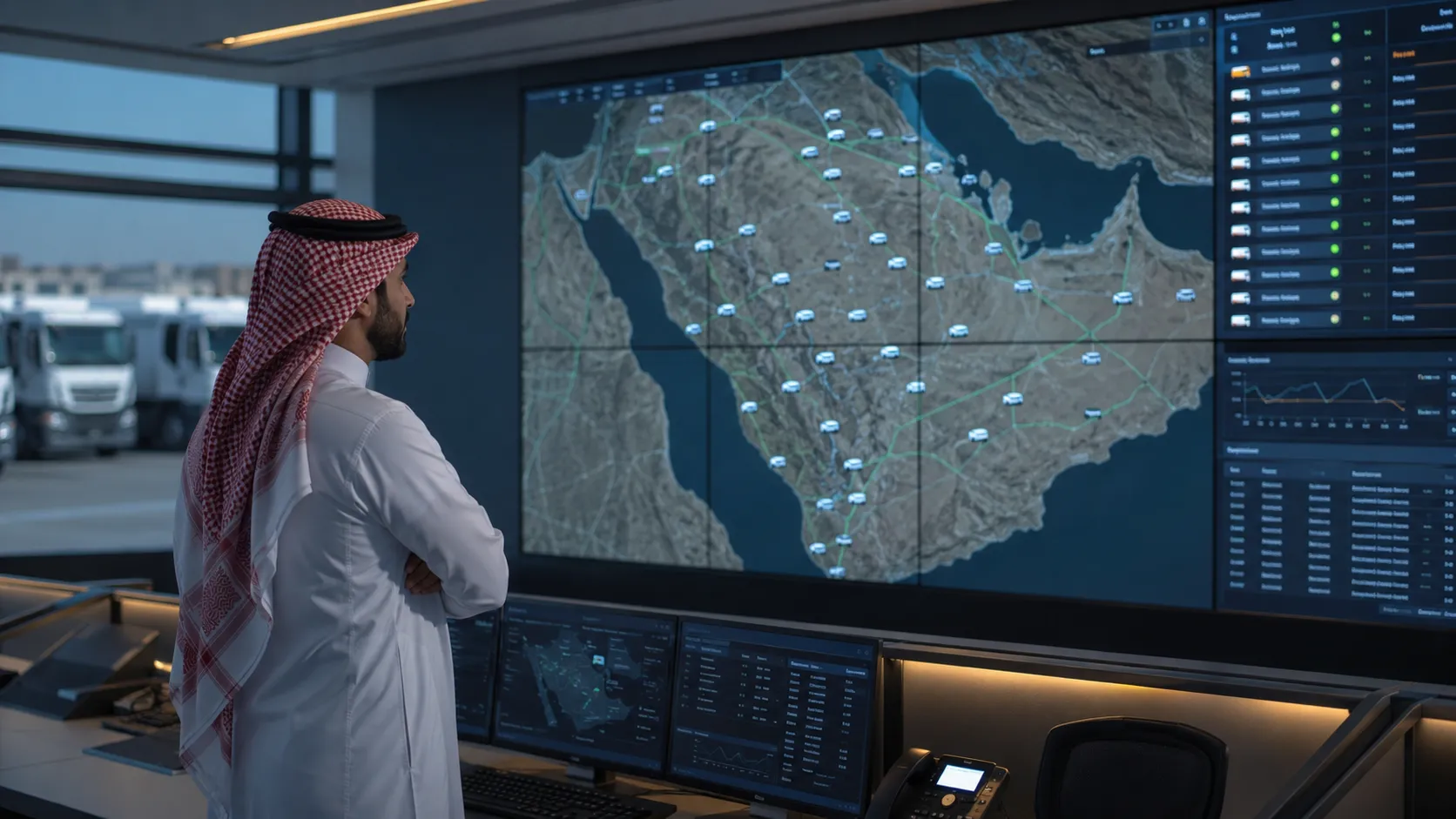
Automatic Vehicle Location is a technology system that uses GPS satellites, cellular communication networks, and cloud-based software platforms to automatically determine and transmit the geographic location of a vehicle in real-time. Unlike basic GPS tracking that simply shows a pin on a map, modern AVL systems are comprehensive fleet intelligence platforms that combine location data with vehicle diagnostics, driver behavior analysis, fuel monitoring, and predictive analytics.
The evolution of AVL has been remarkable. Early systems in the 1990s provided basic latitude and longitude coordinates updated every few minutes. Today's AVL platforms deliver real-time updates every 10 seconds, complete with speed data, engine diagnostics, fuel levels, driver behavior scores, and even AI-powered video analysis from onboard cameras. This transformation from simple location tracking to full fleet intelligence is what sets modern AVL apart from basic GPS tracking solutions.
How Does an AVL System Work?
A modern AVL system consists of four key components working together seamlessly. The first component is the GPS tracking device installed in the vehicle. This hardware unit receives signals from multiple GPS satellites to calculate the vehicle's precise position, speed, and heading. In Saudi Arabia, all tracking devices must be certified by the Communications, Space and Technology Commission (CST) to ensure they meet local regulatory standards.
The second component is the cellular communication module, typically using 4G LTE networks. This module transmits the GPS data along with vehicle diagnostic information from the device to the cloud servers. Modern devices use 4G rather than older 2G or 3G networks, which are being phased out across Saudi Arabia.
The third component is the cloud-based server infrastructure that receives, processes, and stores the data from thousands of vehicles simultaneously. Leading providers host their servers in Saudi Arabia to comply with the Personal Data Protection Law (PDPL) and ensure low-latency performance.
The fourth component is the user interface — a web dashboard and mobile application that fleet managers use to monitor vehicles, configure alerts, generate reports, and make data-driven decisions. The best platforms offer both Arabic and English interfaces to serve Saudi businesses effectively.
Key Features of Modern AVL Systems
Modern AVL platforms offer a comprehensive suite of features that go far beyond simple location tracking. Real-time GPS tracking with 10-second update intervals provides continuous visibility into your entire fleet. Route history and playback allows managers to review exactly where each vehicle has been, with detailed trip logs showing stops, idle times, and distances traveled.
Geofencing is another powerful feature that lets you create virtual boundaries around specific locations such as warehouses, job sites, customer premises, or restricted zones. The system automatically alerts you when a vehicle enters or exits these defined areas. Speed and harsh driving alerts notify managers immediately when drivers exceed speed limits or engage in dangerous behaviors like hard braking, rapid acceleration, or sharp cornering.
Fuel level monitoring through connected sensors tracks consumption in real-time, detecting anomalies that could indicate theft or excessive waste. Maintenance scheduling uses engine hours and mileage data to send automated reminders for oil changes, tire rotations, and other preventive maintenance tasks. Driver behavior scoring aggregates multiple driving metrics into a single performance score, enabling fleet managers to identify drivers who need additional training.
Why Saudi Businesses Need AVL Systems in 2026
Saudi Arabia's Vision 2030 initiative is driving unprecedented digital transformation across every sector of the economy. The fleet management market in Saudi Arabia was valued at approximately 726 million dollars in 2024 and is growing at a compound annual growth rate of 16.47 percent, expected to exceed 2 billion dollars by 2032. This explosive growth is fueled by several factors unique to the Saudi market.
Government mandates increasingly require GPS tracking for commercial vehicles. The Transport General Authority (TGA) mandates GPS for certain transport categories, and the WASL platform provides electronic monitoring for public land transport. CST compliance requirements mean that all tracking devices used commercially must be certified, creating a regulatory environment where fleet tracking technology is not optional but mandatory.
The extreme climate conditions in Saudi Arabia, with temperatures regularly exceeding 50 degrees Celsius, demand rugged and reliable hardware that can operate continuously in harsh environments. The growing logistics and delivery sector, driven by the e-commerce boom and mega-project supply chains, requires sophisticated fleet management tools to maintain competitiveness and efficiency.
Industries Using AVL in Saudi Arabia
AVL technology serves a wide range of industries across Saudi Arabia. Logistics and last-mile delivery companies rely on AVL for route optimization, delivery confirmation, and real-time customer ETAs. Construction and heavy equipment operators use AVL to track excavators, cranes, and trucks across remote project sites including NEOM, Red Sea Global, and Qiddiya developments.
Government agencies and public transport operators use AVL systems integrated with the WASL platform for regulatory compliance and service monitoring. Oil and gas companies deploy AVL for field operations across remote desert locations where vehicle safety and fuel management are critical concerns. School bus operators implement AVL with parent-facing mobile apps to ensure student safety and provide real-time tracking to families.
Corporate fleet managers use AVL to optimize vehicle utilization, reduce unauthorized usage, and control operating costs. Cold chain and pharmaceutical transport companies add temperature sensors to their AVL systems to ensure sensitive goods maintain required conditions throughout the delivery journey.
AVL vs Basic GPS Tracking: What is the Difference?
The distinction between basic GPS tracking and a full AVL system is significant. Basic GPS tracking answers a single question: where is my vehicle right now? It provides location coordinates on a map, simple speed data, and basic route history. This may suffice for personal vehicle tracking or very small fleets with minimal management needs.
AVL, on the other hand, answers a comprehensive set of questions: where is the vehicle, how is it being driven, how much fuel is it consuming, when does it need maintenance, is the driver safe, and how can operations be optimized? AVL platforms include driver behavior monitoring, fuel analytics, predictive maintenance, video telematics, custom dashboards, automated reporting, and API integrations with business systems like ERP and CRM platforms.
The cost difference between basic GPS and AVL is often far less than the value difference. A basic tracker might save you the expense of one component, but without fuel monitoring, driver behavior analysis, and maintenance alerts, you continue losing thousands of riyals monthly to fuel waste, accidents, and unexpected breakdowns.
Getting Started with AVL for Your Fleet
Implementing AVL for your fleet follows a straightforward process. Begin by assessing your fleet size, vehicle types, and specific operational needs. A logistics company may prioritize route optimization and delivery tracking, while a construction firm needs equipment utilization and geofencing capabilities.
Next, choose the right plan that matches your requirements. Most providers offer tiered pricing from basic tracking through advanced analytics and enterprise solutions. Professional device installation ensures reliable operation and proper wiring for features like fuel monitoring and ignition detection. Platform configuration and training prepare your team to use the system effectively from day one.
Once live, your fleet operates with 24/7 monitoring, automated alerts, and comprehensive analytics that drive continuous improvement in efficiency, safety, and cost management. Most fleets see measurable ROI within the first two to three months of implementation.
Ready to implement AVL for your fleet? Get a free consultation from Axtella's fleet specialists. Contact us at sales@axtellaglobal.com or call +966 55 732 3274.
Related Blogs
School Bus Tracking Solutions in Saudi Arabia: GPS + Parent App for Student Safety
Complete school bus tracking solution for Saudi Arabia with GPS monitoring, real-time parent app, and driver behavior alerts for student safety.
Video Telematics and AI Dashcams: The Future of Fleet Safety in Saudi Arabia
Explore how AI-powered dashcams and video telematics are transforming fleet safety in Saudi Arabia with phone detection, fatigue alerts, and HD evidence recording.
Ready to Grow your Business smarter?
Partner with Axtella for integrated technology and infrastructure solutions tailored to your business needs. From telecommunications and IoT to smart buildings and fleet management — our 250+ professionals deliver end-to-end solutions aligned with Saudi Vision 2030.
Discover MoreEnquiry form
Tell us about your project and our team will get back to you within 24 hours.