VideoTelematicsandAIDashcams:TheFutureofFleetSafetyinSaudiArabia

Axtella Fleet Team
Fleet Management Specialists
Fleet Management
Category
February 15, 2026
Post Date
Video telematics represents the convergence of two powerful technologies: fleet tracking and intelligent camera systems. Unlike basic dashcams that passively record video for later review, modern video telematics platforms use artificial intelligence to analyze footage in real-time, detecting dangerous driving behaviors as they happen and intervening before accidents occur. For fleet operators in Saudi Arabia, where long highway distances, extreme heat, and growing traffic density create significant safety challenges, video telematics is rapidly becoming an essential component of fleet management.
What is Video Telematics?
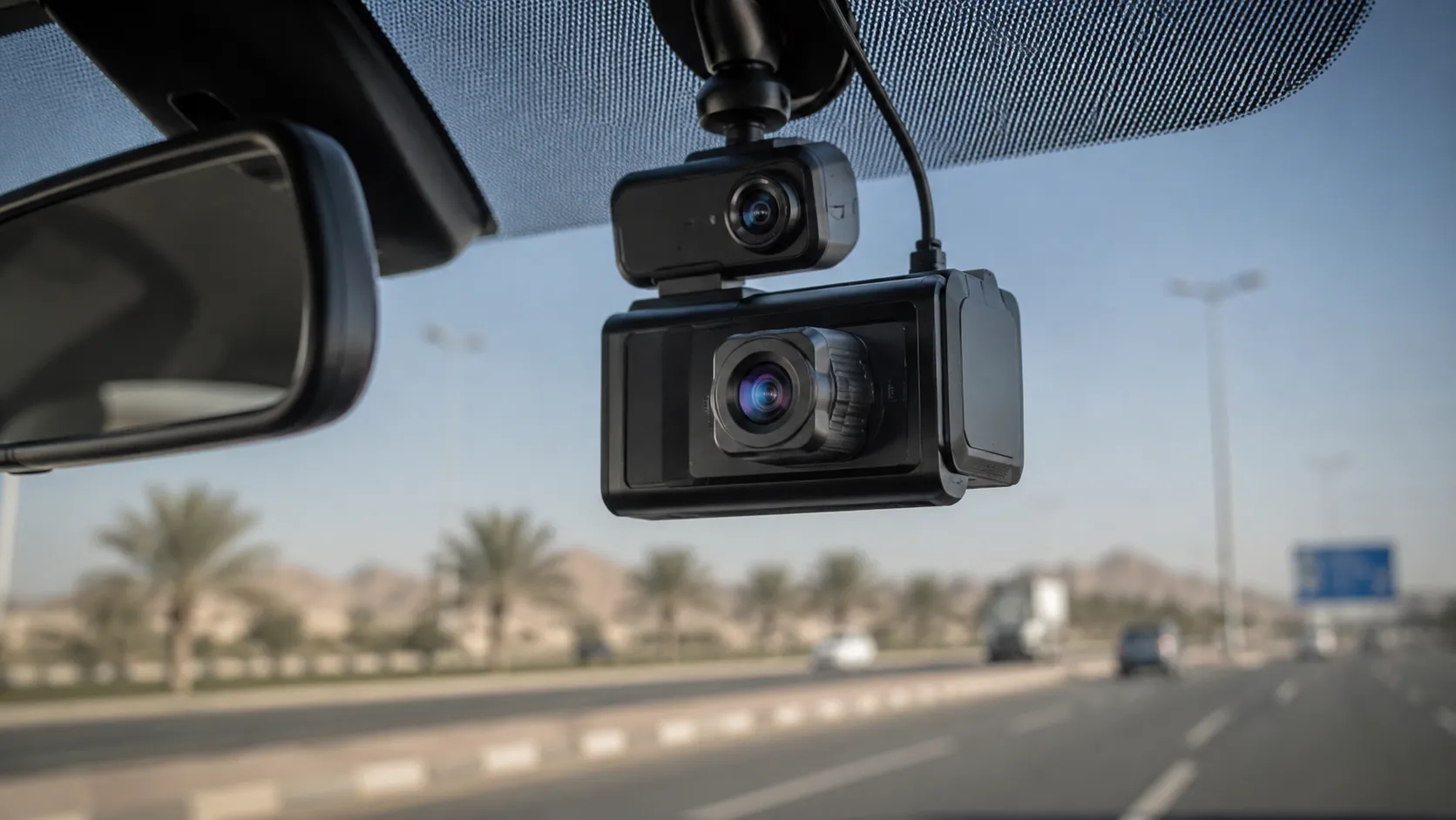
A video telematics system consists of four integrated components working together. The road-facing camera captures high-definition video of the road ahead, recording traffic conditions, other vehicles, lane markings, and road signs. The driver-facing camera monitors the driver's face, eyes, hands, and body position using computer vision algorithms. An onboard AI processor — essentially a small edge computing device — analyzes the video feeds locally in real-time without needing to stream everything to the cloud.
When the AI detects a safety event, it triggers an in-cabin alert to the driver and uploads a short video clip of the event to the cloud platform for fleet manager review. This event-based approach is fundamentally different from continuous recording systems — it generates actionable safety intelligence rather than terabytes of unwatched footage.
How AI Dashcams Detect Dangerous Driving
The detection capabilities of modern AI dashcams are remarkably sophisticated. Mobile phone usage detection identifies when a driver's hand is holding a phone near their face, triggering an immediate audible warning. Drowsiness and fatigue detection analyzes eye closure patterns, yawning frequency, and head nodding to identify drivers who are becoming dangerously tired.
Distracted driving detection monitors head and eye position, alerting when a driver looks away from the road for extended periods. Additional detections include smoking while driving, seatbelt non-compliance, and unauthorized driver identification through facial recognition. Road-facing cameras add forward collision warnings when following too closely, lane departure alerts when the vehicle drifts without signaling, and pedestrian detection in urban environments.
Each detection event triggers a multi-layered response: an audible in-cabin alert gives the driver an immediate opportunity to correct their behavior, a real-time notification appears on the fleet manager's dashboard, and a 10 to 15 second video clip is saved and tagged for later review, coaching, and training.
Front-Facing vs Dual-Facing Dashcams
Fleet operators can choose between two main dashcam configurations based on their safety priorities and budget. Front-facing dashcams record high-definition video of the road ahead, providing excellent liability protection and incident documentation. When an accident occurs, video evidence from a front-facing camera often resolves disputes quickly and favorably, saving thousands in insurance claims. These cameras are the more affordable option, typically costing 650 to 900 SAR for the hardware plus 40 to 55 SAR per month for cloud storage and management.
Dual-facing AI dashcams include everything a front-facing camera provides, plus a driver-facing camera with full AI analysis capabilities. This configuration delivers both road evidence and driver behavior intelligence — detecting phone use, fatigue, distraction, smoking, and seatbelt compliance. The cost is higher at 1,200 to 1,600 SAR for hardware plus 60 to 80 SAR per month, but the safety impact is substantially greater. For fleets where driver behavior is a significant safety concern, the dual-facing configuration typically pays for itself through reduced accident costs within the first year.
Real-World Impact: Safety Statistics
The evidence supporting video telematics is compelling and growing. Industry data consistently shows that AI-powered monitoring systems reduce fleet accident rates by 25 to 40 percent. Distracted driving incidents drop by more than 70 percent after dashcam installation — the combination of awareness that AI is monitoring and immediate audible alerts when unsafe behavior is detected creates a powerful behavioral change.
Insurance companies are taking notice. Fleets with documented video telematics programs increasingly qualify for premium discounts of 15 to 25 percent, reflecting the actuarially demonstrated reduction in claims. Video evidence resolves more than 90 percent of disputed insurance claims quickly and favorably, eliminating the costly and time-consuming process of accident reconstruction based solely on witness statements.
Perhaps most importantly, fatal accident rates in monitored fleets drop by up to 60 percent over 12 months. Behind every statistic is a driver who went home safely to their family because an AI system detected their fatigue or distraction and intervened in time.
Video Telematics for Saudi Arabia's Unique Conditions
Saudi Arabia's operating environment presents specific challenges that video telematics must be designed to handle. Extreme heat exceeding 50 degrees Celsius requires dashcams rated for high-temperature operation — consumer-grade devices will fail within weeks in a Saudi vehicle cabin that can reach 70 degrees when parked in the sun. Commercial fleet dashcams must use automotive-grade components and sealed enclosures.
Long highway stretches between Saudi cities — Riyadh to Jeddah is over 900 kilometers, Riyadh to Dammam is 400 kilometers — create significant fatigue risks for drivers. AI drowsiness detection is not a luxury feature in this environment but a critical safety necessity. Night driving on desert highways with limited lighting demands cameras with excellent HD night vision capabilities.
Sandstorms and harsh environmental conditions require ruggedized and sealed camera units that maintain clear optics despite dust exposure. All camera devices used commercially in Saudi Arabia must be CST-certified, ensuring they meet the kingdom's regulatory standards for electronic equipment.
Privacy, Data Protection, and PDPL Compliance
Driver privacy is a legitimate concern that must be addressed transparently for successful implementation. Under Saudi Arabia's Personal Data Protection Law, drivers must be informed about camera monitoring before it begins. Data access should be limited to authorized fleet managers through role-based access controls.
Video footage should be stored on Saudi-hosted servers to comply with data localization requirements. Clear retention policies — typically 30 to 90 days for event clips — should be established and communicated. The event-based recording approach used by modern systems helps address privacy concerns significantly: cameras are always recording locally but only upload clips when a safety event is detected, meaning fleet managers see targeted safety-relevant footage rather than continuous surveillance of every moment.
Best practice is to have drivers sign acknowledgment forms during the installation process and frame the monitoring explicitly as a safety tool designed to protect them. When implemented with transparency and respect, video telematics programs consistently achieve high driver acceptance and even appreciation, particularly among drivers who recognize that the technology protects them from false accident blame.
Implementation Guide: Adding Dashcams to Your Fleet
Implementing video telematics follows a structured process that balances technical installation with human change management. Start by deciding between front-facing and dual-facing cameras based on your safety priorities, budget, and the specific risks your fleet faces. Professional installation by certified technicians ensures cameras are properly positioned for optimal AI detection accuracy.
Configure AI detection sensitivity and alert thresholds to match your fleet's operating conditions — highway fleets and urban delivery fleets have different baseline behaviors. Before going live, conduct a mandatory driver orientation session that explains the technology, its safety purpose, how data is used, and how drivers can view their own safety scores. This step is critical for adoption and cannot be rushed.
Establish a weekly video review workflow where fleet managers review flagged events, identify coaching opportunities, and track safety trends. Create structured coaching programs that use specific video examples to help drivers improve. Track safety metrics monthly — event frequency, severity trends, and driver score improvements — to measure and demonstrate the program's impact.
Want to see AI dashcams in action? Request a free live demo from Axtella. We will show you real-time driver monitoring, AI alerts, and cloud video review. Contact sales@axtellaglobal.com or call +966 55 732 3274.
Related Blogs
School Bus Tracking Solutions in Saudi Arabia: GPS + Parent App for Student Safety
Complete school bus tracking solution for Saudi Arabia with GPS monitoring, real-time parent app, and driver behavior alerts for student safety.
How to Choose the Right Fleet Management Provider in Saudi Arabia
A comprehensive buyer's guide to selecting the best fleet management provider in Saudi Arabia, covering CST compliance, local support, pricing, and scalability.
Ready to Grow your Business smarter?
Partner with Axtella for integrated technology and infrastructure solutions tailored to your business needs. From telecommunications and IoT to smart buildings and fleet management — our 250+ professionals deliver end-to-end solutions aligned with Saudi Vision 2030.
Discover MoreEnquiry form
Tell us about your project and our team will get back to you within 24 hours.