HowFleetManagementSolutionsReduceFuelCostsby30%inSaudiArabia

Axtella Fleet Team
Fleet Management Specialists
Fleet Management
Category
February 5, 2026
Post Date
For fleet operators in Saudi Arabia, fuel represents the single largest variable cost in their operations. Despite subsidized fuel prices in the kingdom, fuel expenses typically account for 30 to 40 percent of total fleet operating costs. For a 100-vehicle fleet, monthly fuel spending can easily exceed 200,000 SAR. As fleet sizes grow and distances increase across Saudi Arabia's massive 2.15 million square kilometer landscape, fuel optimization has become a critical business priority.
Vision 2030's sustainability goals add another dimension, pushing businesses to reduce both fuel waste and carbon emissions. The good news is that fleet management solutions provide proven strategies to cut fuel costs by 20 to 30 percent through a combination of monitoring, optimization, and behavioral change.
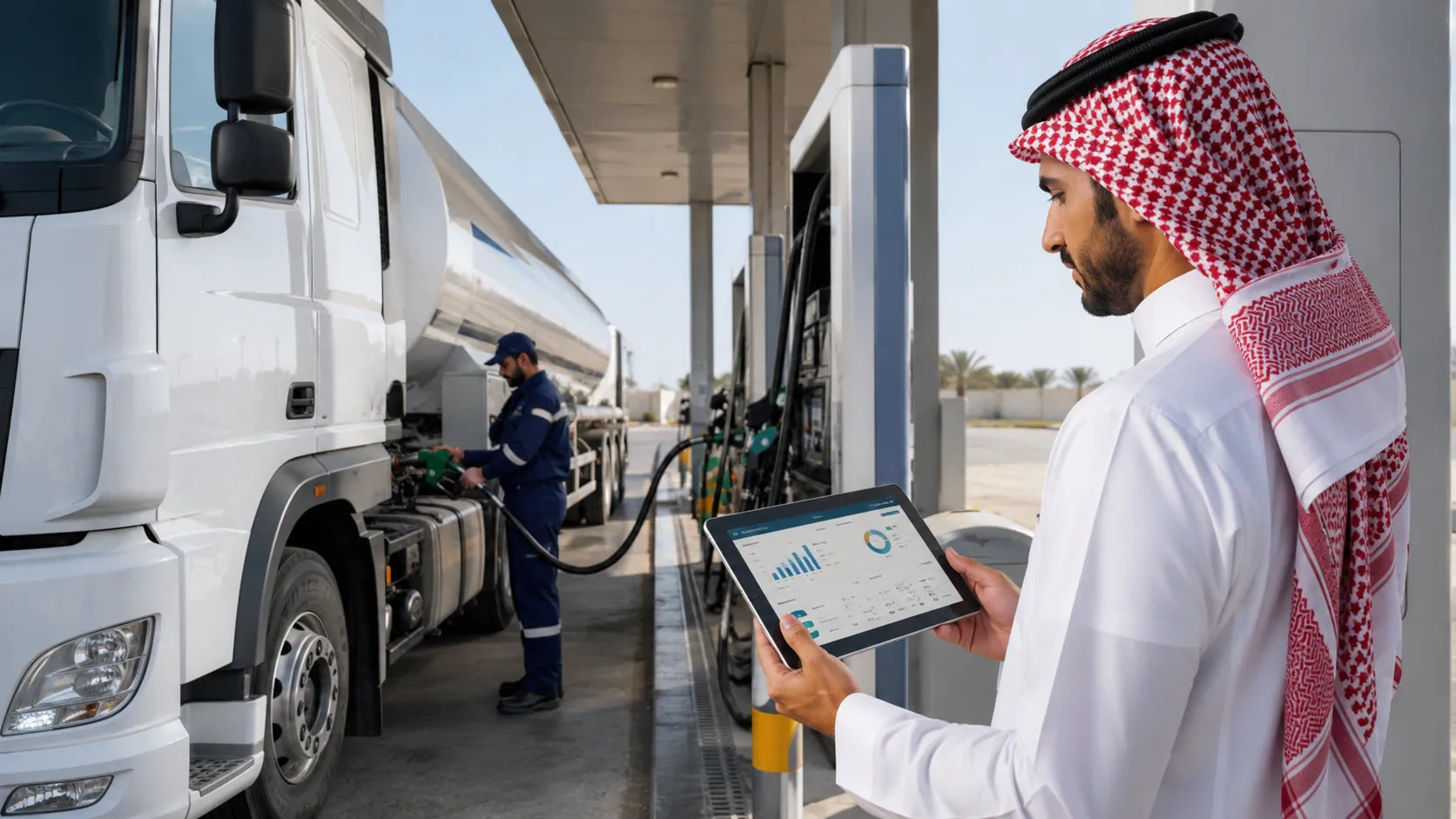
The Five Strategies for Cutting Fleet Fuel Costs
Reducing fuel costs is not about a single magic solution — it requires a multi-pronged approach that addresses every source of waste simultaneously. Fleet management platforms provide the data, analytics, and automation needed to implement five key strategies: eliminating excessive idling, optimizing routes, improving driver behavior, detecting and preventing fuel theft, and maintaining vehicles for peak efficiency. Each strategy independently delivers measurable savings, and together they compound to achieve the 20 to 30 percent reduction that leading fleets are realizing.
1. Eliminate Excessive Idling
Excessive idling is one of the most overlooked sources of fuel waste in Saudi fleets. The average fleet vehicle in Saudi Arabia idles 6 to 8 hours daily, largely because drivers keep engines running to power air conditioning in the extreme heat. Each hour of unnecessary idling wastes 3 to 4 liters of diesel, adding up to significant costs across a fleet.
GPS tracking systems identify idle hotspots with exact timestamps and locations, revealing patterns that managers would never spot otherwise. Automated alerts notify fleet managers when vehicles idle beyond configurable thresholds — for example, more than 5 minutes with the engine running while stationary. This visibility enables managers to address idling through driver education, policy enforcement, and in some cases, auxiliary power units that provide cabin cooling without running the main engine.
A logistics company operating 60 vehicles in the Riyadh area reported reducing idle time by 45 percent within three months of implementing GPS-based idle monitoring, saving approximately 18,000 SAR per month in fuel costs alone.
2. Optimize Routes and Reduce Unnecessary Kilometers
Every unnecessary kilometer driven is fuel wasted. AI-powered route optimization analyzes real-time traffic conditions, distances, delivery windows, and vehicle capacities to calculate the most efficient path for each trip. The system eliminates detours, unauthorized stops, and inefficient multi-stop sequences that drivers often follow out of habit.
Historical route analysis identifies recurring inefficiencies — perhaps a driver consistently takes a longer route to avoid a construction zone that was completed months ago, or delivery sequences that could be reordered to reduce backtracking. For delivery fleets operating in congested cities like Riyadh and Jeddah, optimized routing saves 30 to 45 minutes per driver per day.
The typical result is a 15 to 20 percent reduction in total kilometers driven across the fleet. With fuel consumption directly proportional to distance traveled, this translates into immediate and ongoing fuel savings that grow with fleet size.
3. Improve Driver Behavior
The way a vehicle is driven has a dramatic impact on fuel consumption. Aggressive driving behaviors including hard acceleration, excessive speeding, and sharp braking increase fuel consumption by 15 to 30 percent compared to smooth, steady driving. Most drivers are unaware of how much their habits cost the company in wasted fuel.
Fleet management systems monitor driver behavior continuously, scoring each driver on fuel-efficient driving metrics. Real-time alerts notify drivers when they accelerate too hard or exceed optimal speed ranges. Gamification through leaderboards and scorecards creates healthy competition among drivers, motivating them to improve their scores.
Training programs built on actual driving data target specific bad habits rather than delivering generic safety training. When a manager can show a driver that their hard acceleration habit costs an extra 200 SAR per month in fuel, the motivation to change becomes personal. Companies that implement comprehensive driver behavior programs report 10 to 15 percent fuel savings from behavior improvements alone.
4. Detect and Prevent Fuel Theft
Fuel theft is a significant and often underestimated problem, particularly in construction and logistics operations where vehicles operate in remote areas with limited oversight. Siphoning fuel from vehicle tanks, falsifying fuel card transactions, and unauthorized fueling are all common forms of theft that drain fleet budgets.
Fuel level sensors integrated with GPS tracking systems detect sudden drops in tank levels that indicate siphoning. The system compares actual fuel levels with fuel card transaction records, flagging discrepancies where a reported fill-up does not match the corresponding increase in tank level. Real-time alerts notify managers immediately when fuel levels drop unexpectedly outside of normal driving consumption.
Geofence alerts for unauthorized fuel station visits add another layer of protection. When a vehicle visits a fuel station that is not on the approved list, or fills up when the tank is already above a certain level, the system flags it for investigation. Companies implementing fuel theft detection typically recover 5 to 10 percent of their total fuel budget by eliminating theft and fraud.
5. Maintenance-Driven Fuel Efficiency
Poorly maintained vehicles are fuel-hungry vehicles. A vehicle with underinflated tires wastes 3 to 5 percent more fuel than one with properly inflated tires. Dirty air filters reduce engine efficiency by up to 10 percent. Worn spark plugs, degraded oil, and misaligned wheels all contribute to increased fuel consumption that adds up across an entire fleet.
Fleet management platforms connected to OBD-II diagnostic ports monitor engine health in real-time, identifying issues that affect fuel efficiency before they become obvious mechanical problems. Automated maintenance scheduling ensures that oil changes, filter replacements, tire rotations, and other preventive tasks happen on time based on actual mileage or engine hours rather than arbitrary calendar dates.
Predictive maintenance algorithms identify developing problems — such as a gradually failing fuel injector or a thermostat that is not maintaining optimal engine temperature — before they escalate into expensive repairs or significant fuel waste. In Saudi Arabia's extreme heat conditions, where engines, cooling systems, and tires are under constant stress, proactive maintenance is not just about fuel savings but about keeping vehicles operational and safe.
Real ROI: Fuel Savings by Fleet Size
The financial impact of fuel optimization scales directly with fleet size. A 20-vehicle fleet can expect monthly fuel savings of 6,000 to 9,000 SAR through comprehensive fleet management. A 50-vehicle fleet typically saves 15,000 to 22,000 SAR per month. A 100-vehicle fleet achieves savings of 30,000 to 45,000 SAR monthly, and a 500-vehicle fleet can save 150,000 to 225,000 SAR per month.
When compared against fleet management subscription costs, the ROI is compelling. Most fleets achieve complete payback on their fleet management investment within two to three months, with ongoing savings accumulating month after month thereafter. The savings are not theoretical — they come from measurable reductions in fuel consumption that show up directly on fuel card statements and financial reports.
How to Get Started with Fuel Optimization
The path to fuel savings begins with understanding where your fuel is going today. A fleet fuel audit analyzes your current fuel spending patterns, identifies the biggest sources of waste, and quantifies the potential savings from each optimization strategy.
From there, the implementation follows a clear roadmap: install GPS trackers and fuel sensors on your fleet, configure dashboards with fuel-specific KPIs and automated alerts, train fleet managers on fuel reporting and analysis tools, and begin monitoring and optimizing. The results start appearing within the first month and continue improving as driver behaviors change, routes are refined, and maintenance schedules are optimized.
Request a free fleet fuel audit from Axtella. We will analyze your fuel spending and show you exactly how much you can save. Contact sales@axtellaglobal.com or call +966 55 732 3274.
Related Blogs
School Bus Tracking Solutions in Saudi Arabia: GPS + Parent App for Student Safety
Complete school bus tracking solution for Saudi Arabia with GPS monitoring, real-time parent app, and driver behavior alerts for student safety.
Video Telematics and AI Dashcams: The Future of Fleet Safety in Saudi Arabia
Explore how AI-powered dashcams and video telematics are transforming fleet safety in Saudi Arabia with phone detection, fatigue alerts, and HD evidence recording.
Ready to Grow your Business smarter?
Partner with Axtella for integrated technology and infrastructure solutions tailored to your business needs. From telecommunications and IoT to smart buildings and fleet management — our 250+ professionals deliver end-to-end solutions aligned with Saudi Vision 2030.
Discover MoreEnquiry form
Tell us about your project and our team will get back to you within 24 hours.