DriverBehaviorMonitoring:HowItImprovesSafetyandReducesAccidentsinSaudiFleets

Axtella Fleet Team
Fleet Management Specialists
Fleet Management
Category
February 7, 2026
Post Date
Road safety is one of the most critical challenges facing fleet operators in Saudi Arabia. Long-distance highway driving between major cities creates fatigue risks, extreme heat conditions affect driver alertness and vehicle performance, and growing traffic density in urban centers demands constant attention. For fleet operators, each accident represents not just vehicle damage and repair costs, but insurance premium increases, legal liability, lost productivity, and potentially lost lives.
Driver behavior monitoring technology offers a proven solution. By combining GPS telematics, accelerometer data, vehicle diagnostics, and AI video analysis, modern systems can detect dangerous driving patterns in real-time and intervene before accidents happen.
What is Driver Behavior Monitoring?
Driver behavior monitoring is a technology system that combines multiple data sources to analyze how a vehicle is being driven in real-time. GPS telematics provide speed data and location context. Accelerometer sensors detect harsh braking, rapid acceleration, and sharp cornering events. OBD-II connections read engine data including RPM, throttle position, and gear selection. Together, these inputs create a comprehensive picture of driving behavior that goes far beyond what a supervisor riding in the passenger seat could observe.
Advanced systems add AI-powered dashcams with computer vision capabilities. These cameras analyze the driver's face, eyes, and hands in real-time to detect mobile phone usage, drowsiness and fatigue patterns, distracted driving, smoking, and seatbelt non-compliance. All data feeds into a cloud platform where fleet managers see real-time alerts for critical events and historical trends for each driver across the fleet.
How AI Dashcams Take Safety to the Next Level
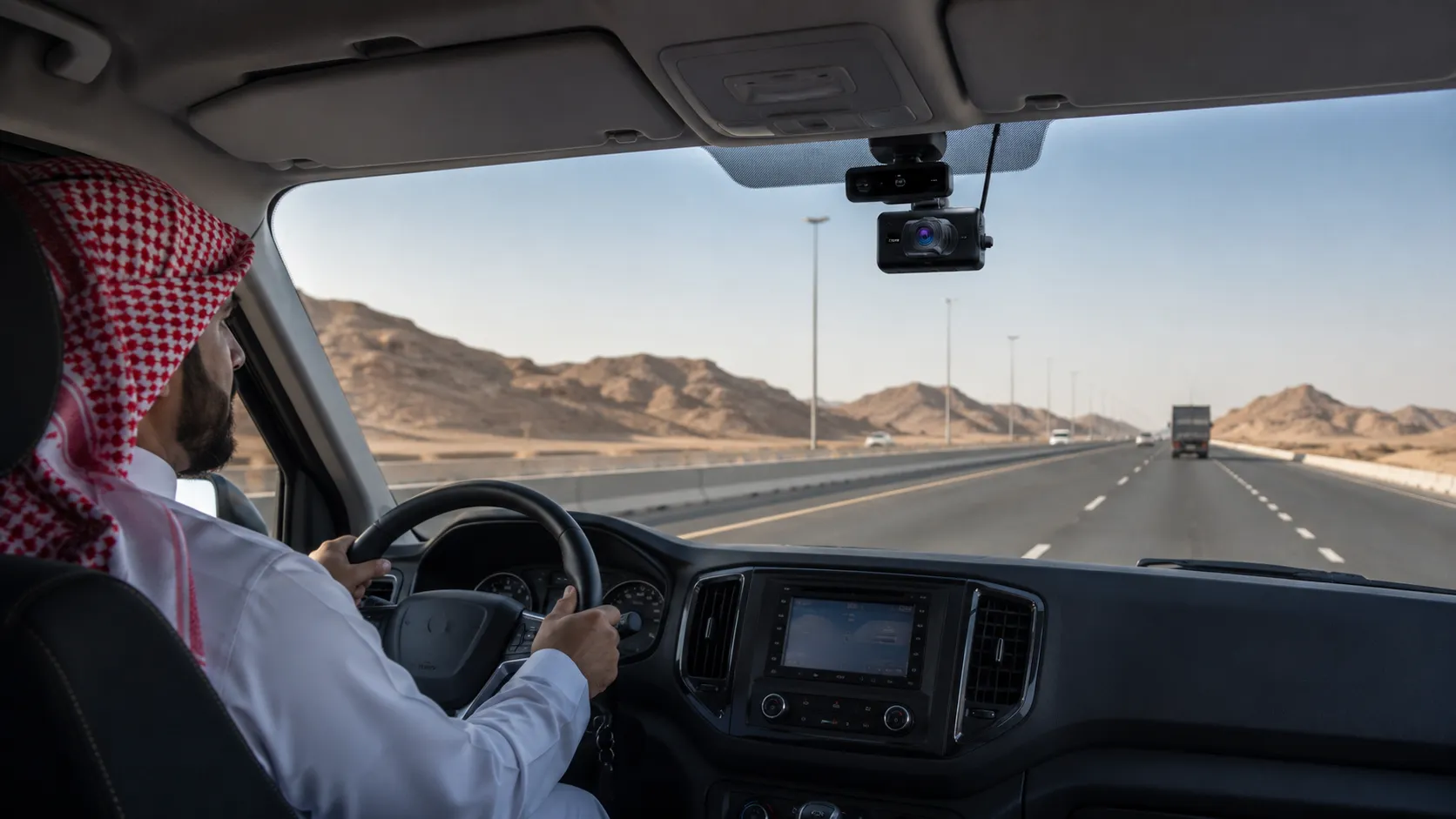
AI dashcams represent the most significant advancement in fleet safety technology in recent years. Dual-facing camera systems provide two perspectives simultaneously. The road-facing camera records high-definition video of the road ahead, capturing traffic incidents, near-misses, and road conditions for liability protection and incident investigation. The driver-facing camera uses AI computer vision to analyze the driver's behavior continuously.
When the AI detects a safety event — such as a driver picking up their mobile phone — it triggers an immediate audible alert inside the cabin, giving the driver a chance to correct their behavior before a dangerous situation develops. Simultaneously, the system sends a real-time notification to the fleet manager's dashboard with a 10 to 15 second video clip of the event for review.
Fatigue detection is particularly valuable for Saudi fleets. The AI analyzes eye closure patterns, yawning frequency, and head position to identify drivers who are becoming drowsy. Given that many Saudi fleet routes involve long stretches of straight highway driving through monotonous desert landscapes, fatigue detection can literally save lives by alerting drivers and managers before a drowsiness-related incident occurs.
Driver Performance Scoring: Gamifying Safe Driving
One of the most effective approaches to improving driver behavior is performance scoring combined with gamification. Each driver receives a composite score from 0 to 100 based on their driving behavior across multiple categories: speeding, braking, acceleration, cornering, and idle time. These scores update continuously based on real-time driving data.
Leaderboards rank drivers across the fleet, creating healthy competition where drivers strive to improve their scores and climb the rankings. Top-performing drivers receive recognition, and companies often implement incentive programs that reward safe driving with bonuses or prizes. Low-scoring drivers are identified for targeted coaching and training rather than punitive action.
This approach fundamentally shifts the culture from punitive monitoring — where drivers feel watched and resentful — to positive motivation where safe driving is recognized and rewarded. Weekly and monthly trend reports show improvement trajectories for individual drivers and the fleet overall, giving managers the data they need to demonstrate that their safety programs are delivering measurable results.
Real Results: How Monitoring Reduces Accidents
The evidence for driver behavior monitoring is compelling. Industry data shows that AI-powered monitoring systems reduce fleet accident rates by 25 to 40 percent. Speeding incidents typically drop by 60 to 70 percent within the first three months of implementation as drivers become aware that their speed is being tracked and scored. Harsh braking events decrease by approximately 50 percent as drivers develop smoother, more anticipatory driving habits.
The financial impact extends beyond accident reduction. Insurance companies increasingly offer premium discounts of 15 to 25 percent for fleets that demonstrate active safety monitoring programs with documented improvement trends. Fleet downtime from accidents reduces by up to 60 percent, keeping vehicles on the road and productive. When you factor in the reduced costs of vehicle repairs, insurance claims, legal proceedings, and lost productivity, the savings from a comprehensive driver safety program frequently exceed the cost of the entire fleet tracking system.
Privacy and Trust: Monitoring Without Micromanaging
The most common concern about driver monitoring technology is privacy. Drivers understandably do not want to feel like they are under constant surveillance. Addressing this concern transparently and proactively is essential for successful implementation.
Best practices begin with clear communication before any cameras or monitoring devices are installed. Explain to all drivers that the system is a safety tool designed to protect them, not a surveillance system meant to catch them making mistakes. Share data transparently with drivers so they can see their own scores and understand how they are calculated. Focus coaching conversations on improvement rather than punishment.
Use video review only for flagged safety events, not for continuous surveillance of driver activity. Comply fully with Saudi PDPL data protection requirements for employee data, including clear policies on data access, retention, and usage. When implemented with respect and transparency, driver monitoring programs consistently achieve high driver acceptance rates, especially once drivers see their own safety improvements reflected in their scores.
Implementation: Getting Started
Implementing driver behavior monitoring follows a structured process. Start by choosing the right monitoring level for your fleet — basic telematics monitoring through GPS data is available at lower cost, while AI dashcams provide the most comprehensive safety coverage. Professional installation ensures devices are properly positioned and calibrated for accurate monitoring.
Configure alert thresholds and scoring parameters to match your fleet's specific operating conditions. A delivery fleet in urban Riyadh will have different speed and braking thresholds than a logistics fleet operating primarily on intercity highways. Conduct a driver orientation session before going live — this step is critical for adoption and cannot be skipped.
Once operational, establish a weekly review cadence where fleet managers analyze safety data, identify trends, and deliver coaching to drivers who need support. Track improvement trends monthly and celebrate milestones with the team. Within three to six months, you will see measurable reductions in safety incidents, insurance costs, and fuel consumption.
Ready to improve your fleet's safety record? Contact Axtella for a free safety assessment and demo. Email sales@axtellaglobal.com or call +966 55 732 3274.
Related Blogs
School Bus Tracking Solutions in Saudi Arabia: GPS + Parent App for Student Safety
Complete school bus tracking solution for Saudi Arabia with GPS monitoring, real-time parent app, and driver behavior alerts for student safety.
Video Telematics and AI Dashcams: The Future of Fleet Safety in Saudi Arabia
Explore how AI-powered dashcams and video telematics are transforming fleet safety in Saudi Arabia with phone detection, fatigue alerts, and HD evidence recording.
Ready to Grow your Business smarter?
Partner with Axtella for integrated technology and infrastructure solutions tailored to your business needs. From telecommunications and IoT to smart buildings and fleet management — our 250+ professionals deliver end-to-end solutions aligned with Saudi Vision 2030.
Discover MoreEnquiry form
Tell us about your project and our team will get back to you within 24 hours.